This site presents publicly available information about Carrara marble. No commercial affiliation implied.

Marble from the Apuan Alps

The quarries above Carrara have supplied stone for Roman columns, Renaissance sculpture, and contemporary facades. This site documents their history, the methods used to extract and cut the stone, and its applications across centuries of Italian architecture.

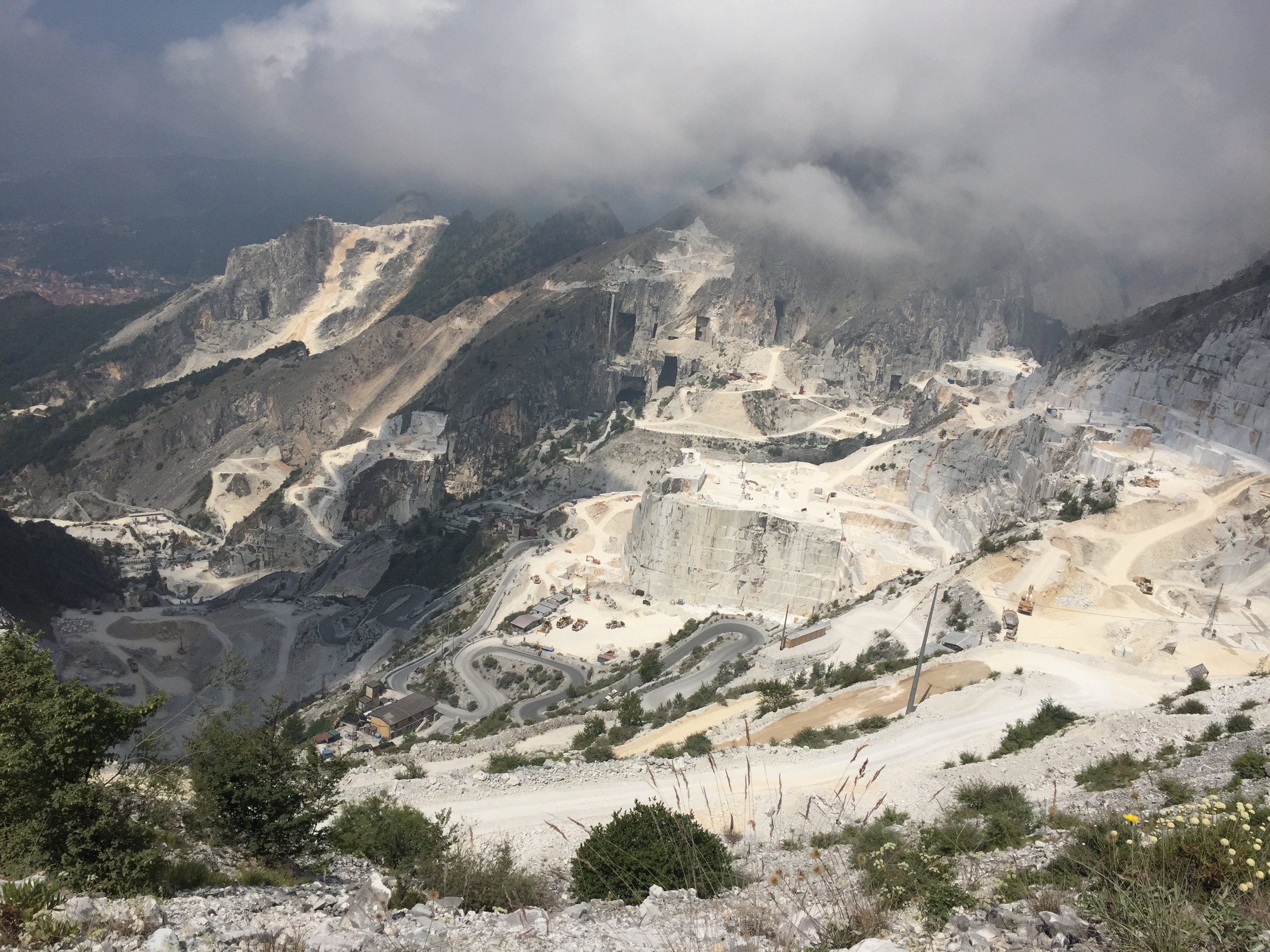
Overview of a Carrara marble quarry showing exposed white stone faces

Carrara marble quarry, Apuan Alps, Tuscany. Source: Wikimedia Commons / CC BY-SA

Quarry History

The Fantiscritti and Colonnata basins have been worked since Roman times. Each basin has a distinct geological profile and a separate extraction tradition developed over two thousand years.

Cutting and Sawing

From hand chisels and plug-and-feather splitting to diamond wire saws and CNC milling, the tools have changed while the fundamental challenge — separating large blocks without fracture — has not.

Architecture and Restoration

Carrara stone appears in the Pantheon cladding, the Florence Cathedral facade, and dozens of post-war restoration projects. Its consistent grain structure makes it a preferred material for matching historical fabric.

Recent Topics

Interior of an active Carrara marble quarry showing extraction faces

Quarry History — May 2026

The Quarries of Carrara: A History of Extraction

From the Roman lautumiae to the mechanised basins of the twentieth century, the Carrara quarries developed a continuous body of technique and infrastructure that shaped the entire region.

Read article →
Diamond wire saw cutting through a marble block in a quarry

Extraction Technique — May 2026

Cutting and Sawing Marble: Traditional and Modern Techniques

Wire saws, frame saws, and disc cutters each interact differently with crystalline marble. The choice of tool affects block yield, surface finish, and the width of material lost as kerf.

Read article →
Facade of Florence Cathedral clad in Carrara white marble and coloured stone

Architecture — May 2026

Carrara Marble in Architecture and Restoration

The consistent whiteness and workability of Statuario and Bianco Carrara made them the default choice for monumental facades and sculptural programmes from the first century CE to the present day.

Read article →

Carrara and the Apuan Alps

The city of Carrara sits at the foot of the Apuan Alps in northern Tuscany. The white streaks visible on the mountainsides above the city are not snow but exposed marble faces — a sight that defined the local economy for more than two thousand years.

The marble-bearing zone extends across roughly 50 square kilometres and contains several dozen active quarries, each with a distinct commercial grade. The most prized varieties — Statuario, Calacatta, and Bianco Ordinario — differ in translucency, vein pattern, and crystal size.

The Museo del Marmo in Carrara holds a reference collection of over 300 named varieties, providing a baseline for matching stone in restoration contexts.

Satellite view of Carrara, Italy showing quarry sites in the Apuan Alps

Carrara region from orbit. Light patches indicate active quarry faces. Source: ESA / Wikimedia Commons

Characteristics of Carrara Marble

Geology

  • Metamorphic limestone, recrystallised under heat and pressure during the Alpine orogeny
  • Primary mineral: calcite (CaCO₃), often above 99% purity in the Statuario grade
  • Crystal grain size ranges from 0.1 mm in fine Bianco to over 1 mm in coarser Ordinario grades
  • Veining results from clay minerals, iron oxides, and graphite trapped during metamorphism

Commercial Grades

  • Statuario: uniform white, near-zero veining, highest translucency — used for sculpture
  • Calacatta: white with bold grey or gold veining — dominant in architectural cladding
  • Bianco Carrara: white to light grey, consistent grain — the standard for floor and wall tiles
  • Bardiglio: blue-grey variety, used for paving and funerary monuments